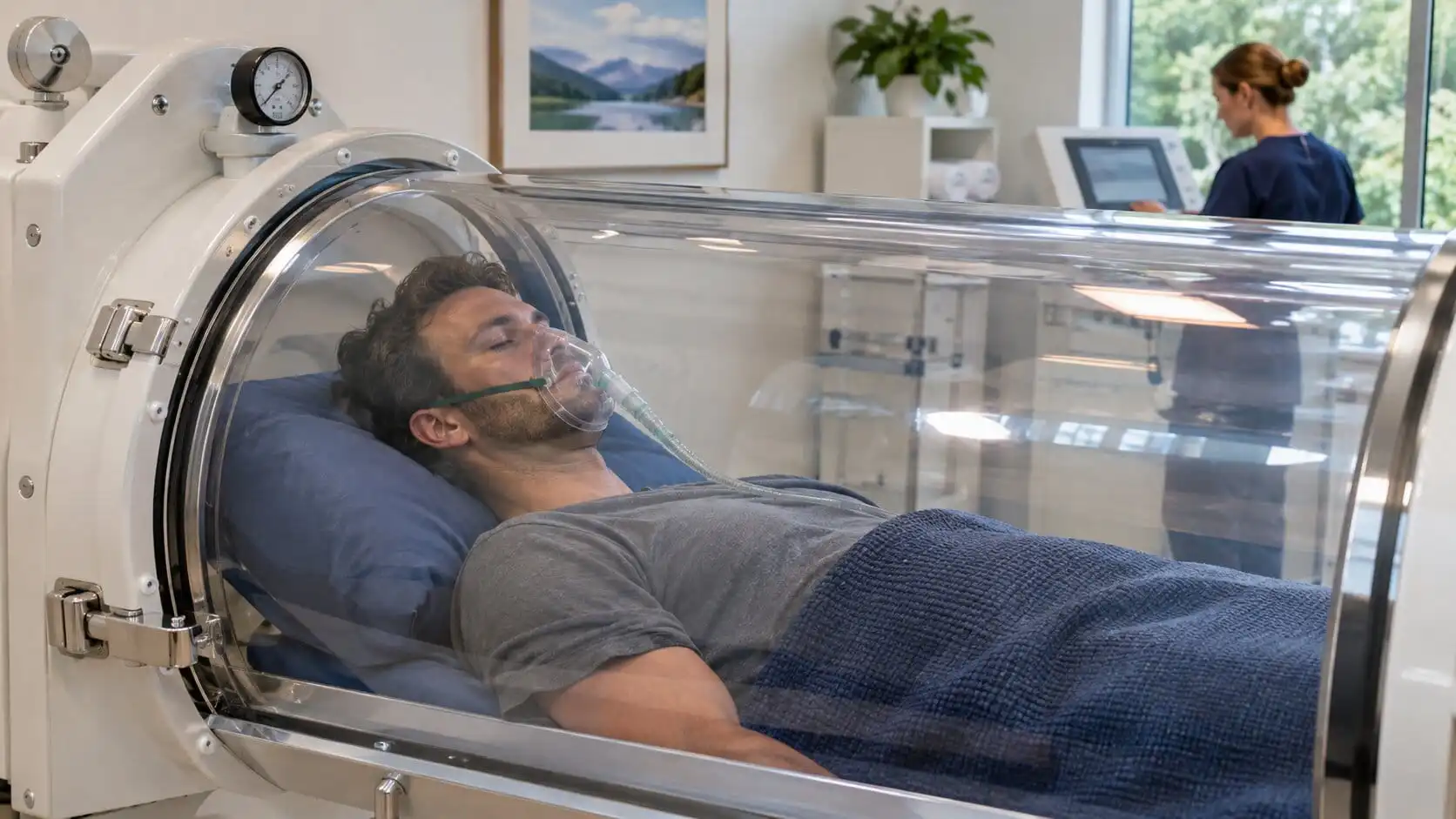
With an estimated 1 to 3 million people visiting emergency rooms for concussions every year in the United States, these are among the most common brain injuries. But even after the initial recovery period, some people continue to experience symptoms for months or even years. Headaches, brain fog, poor memory, and fatigue are among the most commonly reported symptoms of post-concussion syndrome (PCS).
What’s upsetting is that some people struggle to find relief despite trying conventional treatments. That’s where an alternative approach like HBOT (Hyperbaric Oxygen Therapy) has attracted interest.
Most concussion symptoms resolve within weeks. When symptoms persist beyond the expected recovery period, they may be identified as post-concussion syndrome (PCS), a condition that scientists are still trying to understand.
One line of research has identified changes in brain activity and reduced blood flow in certain areas following an injury, as seen in specialized brain scans. These findings led researchers to investigate whether hyperbaric oxygen therapy, which delivers oxygen under increased pressure, might help improve brain function.
Note: PCS symptoms often overlap with sleep problems, mood changes, and even neck injuries. So, a proper diagnosis is necessary to rule out other causes before starting treatment.
One of the best-known trials on post-concussion syndrome was published in PLOS ONE in 2013. Researchers in Israel studied 56 adults whose PCS had lasted one to six years after a mild brain injury.
One group received HBOT immediately after enrolment, while the other waited two months without HBOT before crossing over to the treatment. The treatment involved 40 sessions, five days a week (roughly 60 minutes each), during which participants breathed 100% oxygen at 1.5 atmospheres absolute (ATA).
Published results showed that both groups improved after HBOT across tests of memory, attention, information processing speed, and executive function. The second group showed no significant cognitive improvement during the two-month waiting period. Brain scans showed increased activity in certain regions, particularly the frontal and temporal areas. Quality-of-life scores improved as well.
Additionally, a 2025 study summarized by the Concussion Alliance examined 26 adults who had experienced brain injuries during childhood, on average 23.6 years before treatment.
Participants received at least 40 HBOT sessions at 2.0 ATA, with most completing approximately 60 sessions. Researchers observed improvements in executive function, processing speed, attention, and memory, though not in motor skills. The improvements did not appear to depend on how long ago the injury had occurred.
However, this was a small retrospective study without a separate control group, so its findings need further confirmation.
Neither of these studies used a sham-treatment group, where patients undergo a procedure designed to resemble the real treatment without receiving the same oxygen exposure. Some researchers argue that the pressure changes used in sham sessions may themselves have biological effects. Still, without a suitable sham control, it’s difficult to rule out placebo effects.
However, trials conducted by the U.S. military did use sham controls. The Department of Defense’s 2025 review found that four of five DoD-sponsored trials showed no significant benefit over sham treatment. The fifth reported improvements but did not use a sham control. In longer-term follow-ups of some trials, initial gains diminished over 6 to 36 months.
The FDA has not cleared HBOT specifically for traumatic brain injury or PCS. Therefore, using HBOT for persistent post-concussion symptoms remains an off-label treatment, and insurance generally does not cover it for this purpose.
It’s good to know: The evidence regarding the effectiveness of HBOT for PCS is mixed, and no one can promise a definite cure. Some studies have reported cognitive gains years after an injury, but better-controlled studies have produced conflicting results. Anyone considering HBOT should discuss the evidence, potential risks, costs, and available treatment options with a physician familiar with their medical history.
Studies reporting positive results have used specific protocols, such as breathing 100% oxygen in a hyperbaric chamber at pressures of 1.5 to 2.0 ATA.
The sessions typically lasted 60 to 90 minutes, with treatment courses involving 40 or more sessions. These findings should not be assumed to apply to lower-pressure chambers or treatments that use room air instead of concentrated oxygen.
The type of chamber matters too, as soft and hard hyperbaric chambers can differ in pressure capabilities, oxygen delivery, and safety requirements.
Before starting treatment, ask the provider what pressure they use, what oxygen concentration they deliver, and how many sessions they recommend.
In general, HBOT is well tolerated when performed under appropriate medical supervision. The most common side effect is ear discomfort caused by pressure changes, similar to what you might experience during an airplane’s descent. Some people may also experience temporary vision changes, sinus discomfort, or, rarely, oxygen-induced seizures.
However, a full medical history and screening are necessary before starting treatment. Certain conditions, particularly an untreated collapsed lung (pneumothorax), can make HBOT unsafe.
You should also inform your doctor before starting HBOT, especially if you have lung or ear problems, a history of seizures, or take medications that may affect seizure risk.
Evidence for HBOT in post-concussion syndrome remains mixed. Two studies reported cognitive improvements in people injured years or even decades earlier. However, several sham-controlled military trials found little difference between HBOT and sham treatment.
If your symptoms have persisted for years and other treatments haven’t provided enough relief, it’s understandable to explore additional options. The important question is whether HBOT is appropriate for your situation, considering the available evidence, potential risks, and your medical history.
Discussing these factors with a qualified physician can help you make an informed decision without relying on promises of a guaranteed recovery.

To get started, please share your name, phone number, and email, and we'll be ready to assist you!
Powerdby B3NET.com
