More people are asking: can you safely use a home hyperbaric chamber, or does hyperbaric oxygen therapy (HBOT) belong only in a clinic? The answer depends on the chamber’s design, pressure, oxygen delivery, FDA status, installation, training, and maintenance — not simply on where it’s located. In August 2025, the FDA also issued new safety guidance about HBOT devices after receiving reports of fires connected to their use, which makes these questions more relevant than ever.
A hyperbaric chamber raises the air pressure around your body above normal sea-level pressure, measured in ATA (atmospheres absolute). Normal air is 1.0 ATA; a chamber at 1.3 ATA pressurizes air to 1.3 times normal. Pressure is only half the picture — the other half is oxygen concentration, or what you’re actually breathing. Some chambers use pressurized room air (about 21% oxygen); clinical HBOT typically delivers close to 100% oxygen through a mask or hood. Two chambers with similar-looking marketing can involve very different physiology and fire risk depending on this detail.
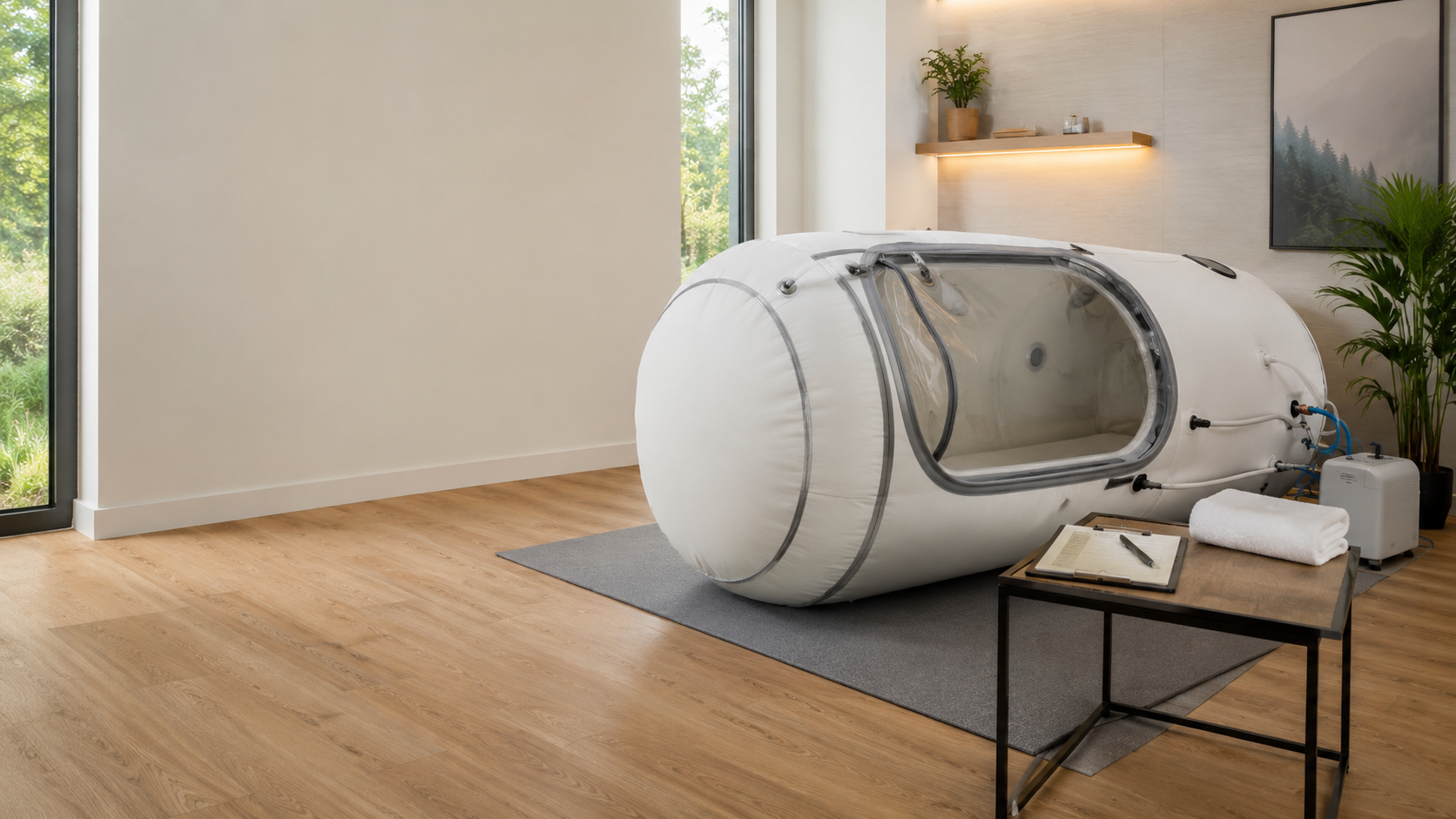
Soft-sided chambers are flexible, zippered fabric enclosures inflated by a compressor, usually rated for lower pressures (often around 1.3 ATA) and marketed for general wellness. The Undersea and Hyperbaric Medical Society (UHMS) has warned that many soft chambers on the market aren’t FDA registered and don’t meet construction standards like NFPA 99 or ASME PVHO-1. The FDA has cleared one type of zippered bag for altitude sickness only — explicitly not for use with oxygen tanks or concentrators — and has flagged homemade oxygen setups built around these bags as a fire and suffocation risk.
Hard-sided chambers use rigid acrylic, steel, or aluminum construction, can reach higher pressures (up to 2.0+ ATA in some models), and generally involve more substantial installation, monitoring, and maintenance requirements.
Neither type is automatically safer — safety comes from the specific device, its regulatory status, and how it’s operated.
| Factor | Soft-Sided | Hard-Sided |
|---|---|---|
| Pressure | Typically lower (~1.3 ATA) | Can reach 2.0+ ATA |
| Portability | Easy to deflate/move | Heavier, usually fixed |
| Oxygen use | Often not cleared for supplemental O2 | Varies by model |
| Key check | Confirm FDA status before adding oxygen | Confirm pressure rating & installation needs |
Usually not — and “approved” is often the wrong word. Most hyperbaric chambers are Class II medical devices that reach market through FDA 510(k) clearance, meaning a manufacturer showed the device is “substantially equivalent” to one already on the market, typically without new clinical trial data. FDA approval (Premarket Approval, or PMA) is a stricter pathway generally reserved for higher-risk Class III devices requiring clinical evidence — hyperbaric chambers don’t typically go through it. Registering a facility or listing a device with the FDA is also a separate, administrative step, not clearance.
Before buying, ask for the manufacturer name, model, exact regulatory status, and 510(k) clearance number if one exists, then verify it using Product Code CBF in the FDA’s 510(k) database. A clearance number doesn’t mean the FDA endorses every condition a seller advertises the chamber for.
On August 25, 2025, the FDA issued a letter to health care providers after reports of fires involving HBOT devices resulted in serious injuries and deaths. The root cause wasn’t known at the time, and the agency still considers serious adverse events rare overall — but recommended reviewing manufacturer instructions, proper electrical grounding, staff training, continuous patient monitoring, maintenance schedules, avoiding static-generating items, and hyperbaric-compatible clothing like cotton. UHMS publicly supported the notice. It’s a reinforcement of existing safety practice, not a declaration that home chambers are unsafe — but the same principles apply at home, without a facility safety officer checking your work.
Fire needs oxygen, fuel, and an ignition source — a pressurized, oxygen-rich chamber can concentrate all three. Avoid synthetic clothing, petroleum-based products, unauthorized electronics, and skipped maintenance.
Certain conditions also warrant a doctor’s input first, including untreated pneumothorax, COPD or other lung disease, recent ear surgery, fever, insulin-treated diabetes, and seizure history. Pregnancy is generally considered a reason not to undergo HBOT at all, since it can constrict blood vessels in the placenta. This isn’t exhaustive — a qualified clinician who knows your history should make the call.
Ask any seller: the chamber’s exact FDA status and clearance number, tested pressure and oxygen delivery method, fire-prevention features, electrical/installation requirements, included training, emergency procedures, maintenance schedule, and support contact. Be wary of “FDA approved” claims without documentation, guarantees of medical outcomes, claims that one device treats dozens of unrelated conditions, and sellers who won’t share regulatory paperwork.
Hyperbaric chamber pricing varies by construction, pressure rating, oxygen system, and installation. In 2026, entry-level soft-shell chambers generally start in the low thousands of dollars, while higher-pressure hard-shell models built for serious home use often run from the tens of thousands upward. Treat any specific figure as a starting point — factor in electricity, maintenance, and consumables too.
Clinics offer trained staff, physician oversight, and standardized equipment for medically recognized indications, often at insurance-eligible per-session cost. Home chambers offer unlimited access once purchased, but shift all monitoring, maintenance, and emergency preparedness onto you. The right setting depends on why you’re considering HBOT.
Are home hyperbaric chambers FDA approved? Usually not — most are 510(k)-cleared, not PMA-approved. Ask for the clearance number.
Is 2.0 ATA better than 1.3 ATA? Not automatically; appropriate pressure depends on the medical indication and physician guidance.
Can I use 100% oxygen at home? Only in a chamber specifically rated and cleared for it — improvised oxygen setups are a known fire and suffocation risk.
Do I need a doctor first? Yes, if addressing a specific condition, given contraindications like untreated pneumothorax; a quick check-in is wise even for general wellness use.
How do I verify FDA clearance? Search the device’s 510(k) number and Product Code CBF in the FDA’s clearance database.
A home hyperbaric chamber is medical equipment, not a wellness accessory to buy on impulse. Investigate the chamber’s FDA status, pressure and oxygen specs, installation needs, fire safety, training, maintenance, and your own medical suitability before buying. If you’re comparing options, ask any provider for specifications, regulatory documentation, installation requirements, and safety protocols — without expecting a guarantee of medical outcomes.
This article is for general educational purposes and does not constitute medical advice. Talk with a qualified healthcare provider before starting hyperbaric oxygen therapy.

To get started, please share your name, phone number, and email, and we'll be ready to assist you!
Powerdby B3NET.com
